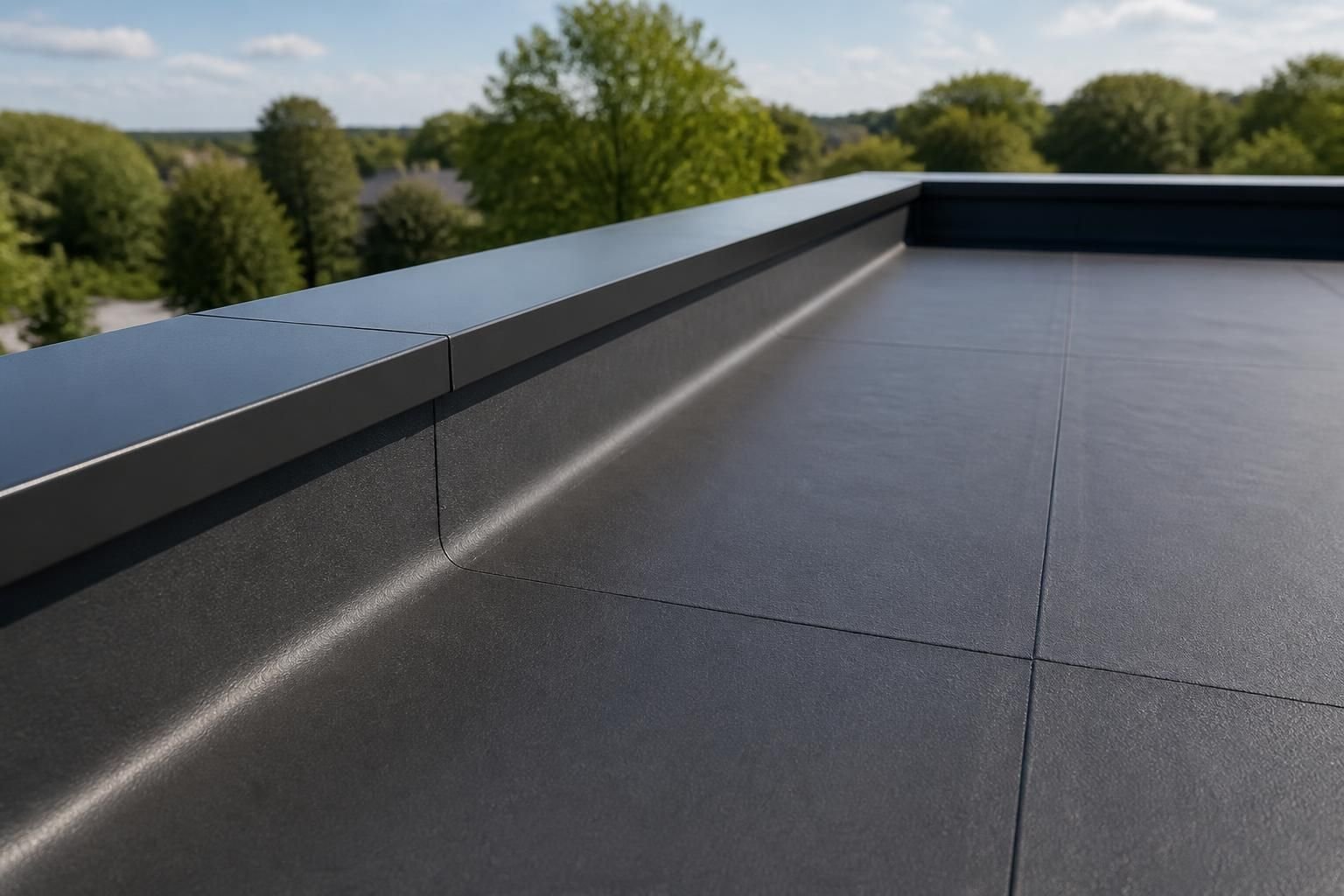
A flat roof that holds water, shows bubbling seams, or keeps developing leaks can turn a small concern into a larger repair project. If you are seeing stains on ceilings, damp insulation, separated flashing, or ponding that lingers after rain, the roof is already asking for attention.
IronCrest Construction Group helps property owners across Dallas sort out flat roofing concerns with direct inspections, straightforward recommendations, and repair or replacement options based on the roof’s condition. We look at the surface, seams, drainage points, penetrations, and damaged sections so you can decide what makes sense next.
Flat roofs can perform well, but they depend on clean drainage, sealed seams, and consistent surface condition. When any one of those parts fails, water can stay where it should not and start working into the building.
Common signs that deserve attention include:
These warning signs do not always point to the same fix. Some roofs need targeted repairs, while others have reached the point where replacement is the smarter path. A careful inspection helps separate surface damage from deeper problems.
Flat roofing problems can hide in plain sight. Water often enters at one weak point and then travels before showing up indoors, which is why a detailed look matters.
We check for cracks, punctures, weathered membrane areas, splits, and worn material that may no longer protect the roof the way it should. The surface can tell a clear story about age, exposure, and past patch work.
Ponding water often points to drainage trouble. We examine roof slope, drains, scuppers, and any places where debris may slow water movement. A flat roof does not have to be perfectly level, but it does need a route for water to leave the surface.
Many leaks begin around flashing, pipe boots, skylight areas, HVAC curbs, and other roof penetrations. These locations shift and wear faster than the main field of the roof, so they deserve close inspection.
Not every flat roof issue calls for a full replacement. Some roofs can be restored with focused repair work, while others have too much surface wear, moisture intrusion, or structural concern to justify more patching.
Good for isolated punctures, seam issues, flashing separation, or a single damaged area that has not spread.
Useful when one portion of the roof has extensive wear, repeated leaks, or failed material that has not affected the entire system.
Often the better choice when the roof has widespread aging, recurring leaks, multiple problem areas, or moisture that has worked through the system.
IronCrest Construction Group helps Dallas property owners review those options without pushing the same answer for every roof. The right decision depends on what the roof is showing now, not only on its age.
Flat roofing is not one single product. Different properties use different materials, and each one has its own wear patterns, repair approach, and replacement planning considerations.
When we inspect a roof, we look at how the material is aging, where stress is showing up, and whether repairs will hold up or only delay the next leak. That helps keep the next step practical.
Flat roofs can take damage from hail, wind, heavy rain, and debris, even when the problem is not obvious from the ground. After a storm, a roof may look mostly fine while seams, flashing, or surface layers have already been affected.
Storm-related concerns may include:
We can inspect the roof, document visible damage, and explain what appears repairable versus what may need broader work. That is especially helpful when roof damage is part of a larger restoration project.
Once we understand the condition of the roof, the next step is a repair plan that fits the actual problem. For some roofs, that means sealing seams and addressing a few trouble spots. For others, it means replacing damaged sections and correcting the areas that allowed water to enter.
Water often shows up away from the entry point, so we trace the path of the leak rather than assuming the stain marks the exact source. That can save time and reduce repeat repairs.
When patch work is appropriate, it needs to bond with the surrounding roof material and blend with the existing system as closely as possible. A patch should address the problem, not create a new weak point nearby.
If the roof has multiple damaged zones, we help plan a replacement that addresses the underlying issues, including drainage trouble, worn flashings, and aging surface material. That is often the cleaner long-term move for a heavily worn flat roof.
Flat roofing for Dallas properties often serves a wide range of buildings, from homes with low-slope sections to commercial buildings with larger roof areas. That means the roof must handle different uses, different layouts, and different exposure points.
IronCrest Construction Group works with homeowners, business owners, property managers, and commercial property owners who need a flat roof inspected or repaired with clear communication. We also support roof installation and roof replacement projects when the existing roof has reached the point where repair is no longer practical.
If you need flat roofing help for a property in Dallas, the goal is simple: find the source, explain the condition, and choose a fix that matches the roof’s actual needs.
A flat roof visit should leave you with a clear picture of what is happening and what the next step should be. We focus on the roof areas that matter most and explain the findings without flooding you with jargon.
We look at visible wear, seams, flashing, drainage, and any obvious damage points.
We identify where water is entering or where conditions are likely to lead to leaks.
We explain whether repair, section replacement, or full replacement appears to be the better fit.
That process gives you a practical path forward instead of guesswork.
If water remains on the roof after rainfall and keeps returning to the same spot, it should be checked. Repeated ponding can shorten the roof’s service life and reveal drainage problems.
Yes. Leaks can start at seams, flashing, or penetrations where damage is harder to see from the ground. Interior stains may be the first obvious sign.
Edges are exposed to movement, weather, and flashing separation. Once those transitions loosen, water can work under the roof material more easily.
Not always. A few isolated blisters may be managed with repairs, but widespread blistering can point to broader roof aging or trapped moisture.
Repeat leaks often mean the original source was not fully addressed, or the surrounding roof material is too worn for a small patch to last.
Look at the number of leak points, the condition of the seams, the amount of surface wear, and whether repairs keep failing. If issues are spreading, replacement may be the better path.
If your flat roof is showing leaks, ponding, seam separation, or storm damage, a focused inspection is the fastest way to understand the condition of the roof. IronCrest Construction Group provides flat roofing inspections, repairs, roof replacement planning, and storm restoration support for Dallas properties that need a clear next step.
Call +18444766669 or visit us at 1910 Pacific Ave., Ste. 200, Dallas, TX 75201 to schedule an estimate and get answers for your flat roof.

Get Started
Share what you are seeing, whether it is a leak, missing shingles, storm damage, or an aging roof. We will review the condition of the roof and help you choose the next best step for your property.